


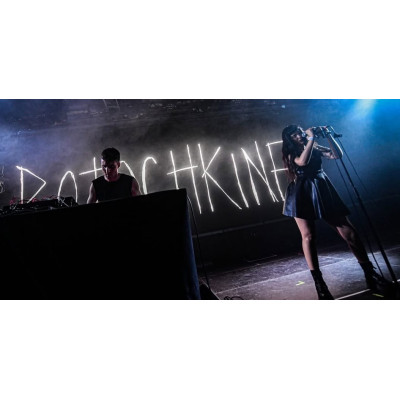
Potochkine: Two Souls, Dark Synths and a Burning Desire to Set the Night on Fire!
Some bands make music to get played on the radio. Others seem to have been born for dark basements, endless nights, sweaty dance floors and minds that refuse to fall into line. Potochkine definitely belongs to the second category.
Behind this unusual name, which sounds like something straight out of an old surrealist movie, are two French artists: Pauline Alcaïdé and Hugo Sempé. Their playground? Dark, edgy electronic music somewhere between cold wave, techno, EBM and raw punk energy. This is music that doesn't try to stroke you gently in the right direction. It grabs you by the collar and drags you straight into its world.
And if you think electronic music always means a DJ hiding behind a computer while the crowd mechanically nods its head, you might be in for a surprise.
Potochkine: Welcome to the Danger Zone
Since emerging in 2016, the duo has developed a musical identity that refuses to be boxed into a single genre. The rhythms are repetitive, the basslines pound, the synthesizers paint nocturnal landscapes, and Pauline's voice cuts through it all with an intensity that feels as much like poetry as theatrical performance.
You can hear echoes of 1980s cold wave, industrial body music and contemporary electronic sounds, all infused with that extra edge of tension that makes the difference.
With Potochkine, darkness doesn't stop you from dancing. It gives you even more reason to do it.
Their tracks can be physical, almost brutal, while retaining a genuine poetic dimension. There is anger, desire, doubt, strange imagery and emotions that don't ask permission before barging in.
The result is both cerebral and visceral. You can dig into the lyrics and search for their meaning, or simply surrender to the pulsing beats and the atmosphere.
Pauline and Hugo: Two Worlds Colliding
Potochkine is not simply a singer accompanied by an electronic musician. It is the meeting of two creative minds whose sensibilities complement one another.
Pauline Alcaïdé: A Voice That Refuses to Be Background Noise
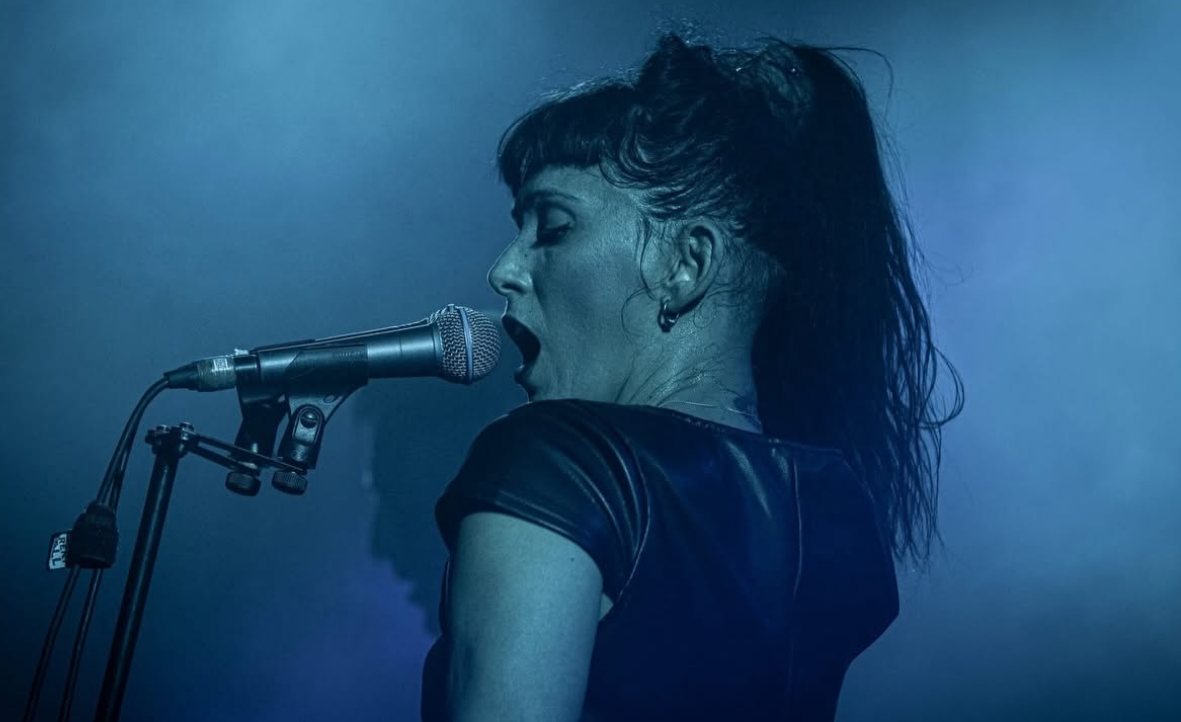
Pauline is much more than a voice laid over electronic beats. She is central to the project's identity, with her French lyrics, expressive delivery and commanding stage presence.
Coming from a punk background, she has retained a taste for urgency, raw energy and the refusal to smooth out every rough edge. Within Potochkine, that attitude takes shape through a theatrical style of performance that can be provocative, vulnerable or unsettling, but rarely leaves anyone indifferent.
Pauline writes the duo's lyrics. Words therefore play a vital role in their music. They are not simply there to accompany the rhythms; they become part of the sound itself.
The French language gives their music a distinctive character. Consonants snap, phrases cut through the beat, and words become almost percussive. Even when you don't catch every lyric, you can feel the intention behind it.
And that may be one of the duo's greatest strengths: conveying an emotion before giving you all the clues needed to understand it.
Hugo Sempé: The Architect Behind the Machines
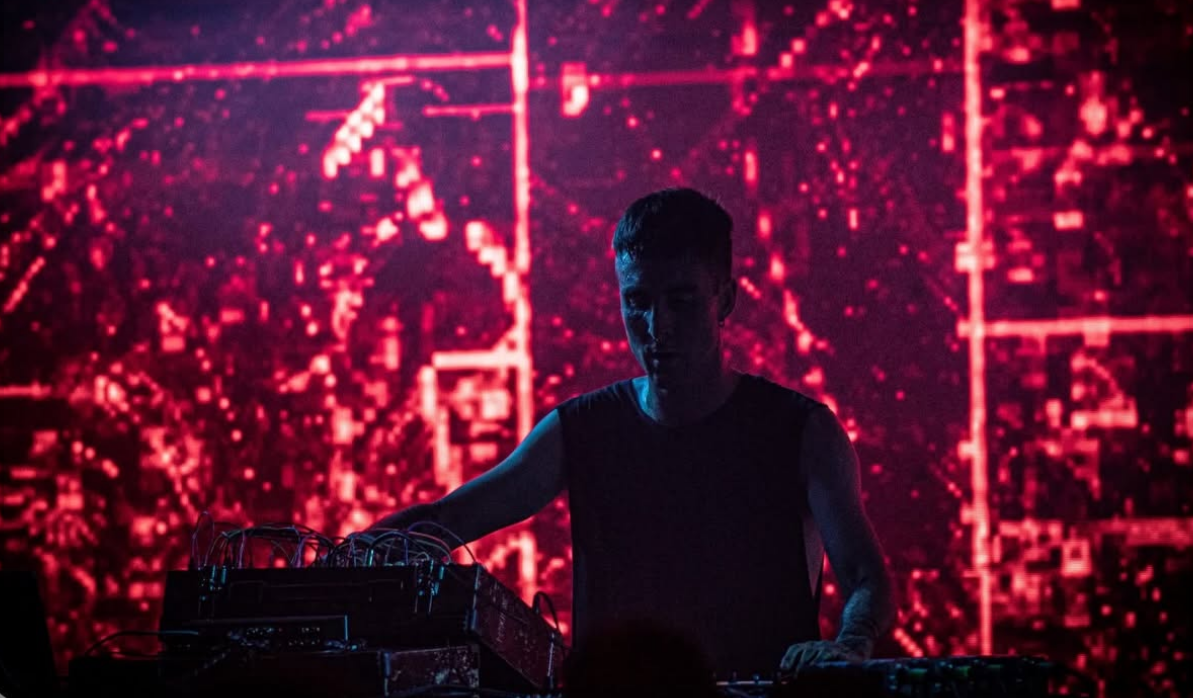
Hugo brings his passion for electronic music, techno and sonic experimentation to the project.
His influences include techno pioneers such as Jeff Mills, Robert Hood and Underground Resistance. But his musical universe extends well beyond the dance floor, encompassing ambient, dubstep, drum and bass, and industrial music.
In Potochkine's sound, synthesizers and rhythms are not just tools for getting people moving. They create spaces, build tension and contribute to the dramatic intensity of each track.
Hugo also uses modular synthesizers on stage, as part of a hybrid live setup in which machines can interact with one another. Experimentation and unpredictability are therefore part of the process: sounds are not merely reproduced but actively shaped and explored.
It is this dialogue between voice and machines that gives the duo its distinctive character. Pauline brings the flesh, the words and the human presence; Hugo builds the pulses and electronic landscapes. Yet their two worlds constantly interact.
Theatre, Imagination and Freedom
Before fully committing themselves to their musical project, Pauline and Hugo both studied theatre.
This is more than a minor biographical detail. It helps explain why their concerts feel more like performances than a straightforward sequence of songs.
Their theatrical background has helped them develop the ability to listen to one another, improvise and build a relationship with the audience. On stage, gestures, eye contact and interpretation matter just as much as the sounds themselves.
Their story also has an unusual little twist: the name Potochkine comes from a word invented by Hugo's goddaughter. As a child, she had taken to calling Pauline by this made-up name instead of her real one.
The duo eventually adopted it.
It's hard to imagine a better illustration of their philosophy: keeping a child's imagination alive, inventing their own language and refusing to follow the rules just because they're there.
Their first EP, Libérez votre imagination (Free Your Imagination), released in 2016, already expressed their desire to build a world of their own rather than follow a ready-made formula.
From Mythes to Sortilèges: Building Momentum
With their early releases, Potochkine laid the foundations of a universe where electronic music meets theatre and poetry.
In 2019, the album Mythes became an important milestone in their journey. The tracks were connected to theatrical productions, including Les Bacchantes, Narcisse and Salopards. Music was part of a wider creative process built around performance and dramatic storytelling.
In 2021, the duo released Sortilèges, a more tightly focused album bringing together eight tracks. EBM rhythms, dark synthesizers and an intense vocal performance combined with striking effectiveness.
The record was composed and recorded during the lockdown period, when the two artists were staying in the south of France. Rather than simply endure the enforced break, they chose to isolate themselves and devote their time to making music.
The result lives up to its title. It's a collection of tracks that make you want to dance while leaving behind a lingering sense of unease, mystery or fascination.
Tracks such as Pogo and Possédée reveal two sides of their musical personality: the explosive energy of the former and the more mysterious atmosphere of the latter.
For those who want to take the experience further onto the dance floor, Sortilèges Dans le Club offers a more club-oriented reinterpretation of this dark electronic universe.
Sang d'Encre: When Darkness Becomes Danceable
n October 2025, Potochkine opened a new chapter with Sang d'Encre, their next album.
Four years separate this release from Sortilèges. Yet the duo returns to the ingredients that make its sound so distinctive: hypnotic rhythms, tense electronic textures and lyrics that do much more than fill the silence.
The album features seven tracks, including BI, Endorphines, Partir, Tristesse Fantasmée, Bonnie, Pénurie de Larmes and La Source.
From BI and Endorphines, the tone is clear: the music drives forward with a dark, almost mechanical energy, while Pauline's voice asserts its presence and intent.
But Sang d'Encre is more than a machine designed to get fans of industrial music dancing. The record also leaves room for vulnerability, anxiety, melancholy and experimentation.
La Source, which closes the album, unfolds into an extended atmospheric passage. Its origins lie in a mysterious place the two artists discovered in the south of France: a black iron door embedded in the rock, deep in the forest. That image inspired them to create a sonic journey using field recordings and electronic manipulation.
It perfectly captures the duo's creative spirit: starting with a sensation, an image or an emotion, then turning it into something entirely their own.
Live, the Machines Come Alive
Potochkine's full power is probably best experienced on stage.
The rhythms pound, the synthesizers build tension, and Pauline's voice transforms the lyrics into something closer to a statement than a conventional vocal performance. The duo's theatrical background is evident in the way they inhabit their songs and maintain a connection with the audience.
This is not simply about reproducing the albums exactly as they sound on record. The goal is to create a shared atmosphere, almost hypnotic, where bodies start moving while minds remain engaged.
The duo has appeared at festivals and events dedicated to alternative and electronic music, sharing bills with artists from a wide range of musical scenes.
Potochkine has also built an audience beyond France, performing across Europe and elsewhere. Their music works even when the lyrics aren't fully understood: the rhythms, the voice and the sheer intensity of the performance transcend language barriers.
And that's quite an achievement for music that places such importance on words.
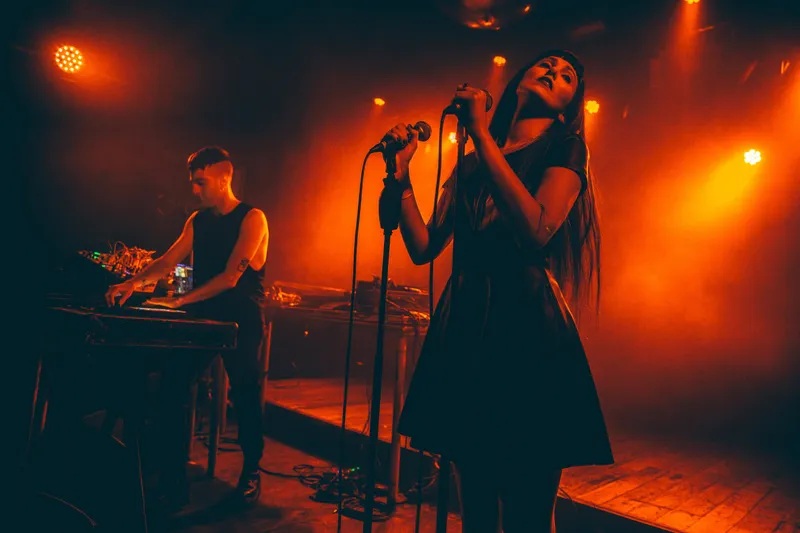
So, Who Is Potochkine For?
Fans of cold wave, EBM, dark techno and synthpunk will feel right at home. But so will anyone who likes their music with a little danger, mystery and unpredictability.
f you're into independent electronic music, nocturnal atmospheres and bands that would rather cultivate their own identity than chase the latest trends, Potochkine deserves a place on your playlist.
This isn't necessarily music designed to please everyone. And that's a good thing.
The duo has developed a personality of its own, combining poetry, tension, imagination and electronic pulses. They prove that music can be danceable without being lightweight, experimental without being cold, and dark without losing its emotional depth.
Potochkine: You Don't Need Light to See Clearly
In a musical landscape where labels keep multiplying and everything seems to need an immediately recognisable identity, Pauline Alcaïdé and Hugo Sempé continue to carve out their own path.
Their strength lies in the meeting of two worlds: Pauline's punk energy and expressive delivery, Hugo's electronic explorations, their shared theatrical background and their determination to keep their imagination alive.
With Sang d'Encre, Potochkine confirms that dark music can still reinvent itself, surprise listeners and fill a dance floor without losing its edge.
So turn down the lights, crank up the volume and let the machines take control.
Potochkine isn't here to tuck you in. They're here to drag you into the night.

Related Posts
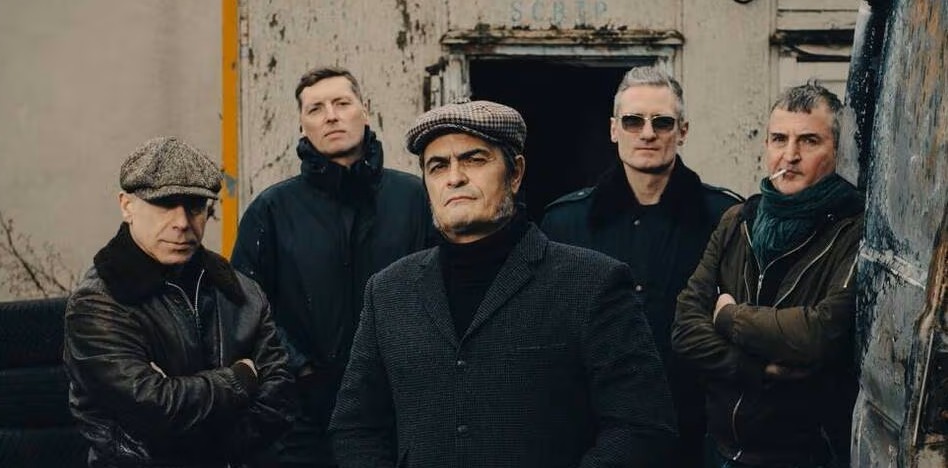
Let's get straight to the point: if post-2000 French rock needed a defibrillator shock, it was Frustration that pushed the button.
Well, I did say strictly underground only. But what can you do? When a band as iconic as The Young Gods releases an album this powerful, rules go right out the window! Join me as we rediscover the band's history, along with a custom selection of their best tracks on Appear Disappear
"Hailing from the underground scene, Night in Athens is the post-punk / darkwave solo project led by the artist Anji. Based in London but steeped in her Greek roots, she breathes a raw and introspective energy into contemporary electronic music."


The SoapGirls are a defiance of mathematics. This punk-rock outfit, fronted by sisters Noémie and Camille Debray alongside drummer Daniel Ryan, is a wild fusion of raw rock attitude, modern pin-up magnetism—the kind that breaks boundaries without falling into cliché—and onstage contortionism that electrifies the crowd. A bit much? Perhaps. But it’s exactly this excess that defines the Debray sisters.